In one of Houston’s busiest hospitals, a surgeon with a Nigerian surname prepares for another operation.
Across town, families shop for yams, stockfish, palm oil, and spices at African markets filled with the sounds of Yoruba, Igbo, and pidgin English. On the southwest side of the city, Suya smoke rises into the humid Texas night while Afrobeat music spills from lounges and restaurants packed with young professionals, entrepreneurs, nurses, engineers, and students.
Inside church halls and family homes, another conversation quietly unfolds:
Did we come here simply to survive or did we come here to build something bigger?
Over the last four decades, Nigerians have helped transform Houston into what many now describe as the most influential Nigerian diaspora hub outside Nigeria itself.
Today, the Greater Houston area is estimated to be home to more than 150,000 Nigerians and Nigerian-Americans, making it one of the largest African immigrant populations in the United States.
But this story is not simply about immigration.
It is a story about ambition, education, sacrifice, wealth creation, identity, and the rebuilding of home thousands of miles away from home.
Why Houston Became a Magnet for Nigerians
The connection between Nigeria and Houston was never accidental.
Nigeria is one of Africa’s largest oil-producing nations. Houston is widely known as the energy capital of the world.
For decades, multinational oil companies operating in Nigeria including major energy firms with offices in Houston created natural pathways for Nigerian engineers, geologists, technicians, and energy professionals to move between both regions.
To many Nigerian professionals, Houston did not feel entirely foreign.
The industries were familiar.
The technical language was familiar.
The opportunities were larger.
What began as temporary training programs, graduate school admissions, and work contracts slowly evolved into permanent migration.
A six-month assignment became a two-year contract.
A two-year contract became permanent residency.
Permanent residency became children born with Texan accents.
At the same time, Nigeria itself was going through difficult political and economic periods.
Military coups, inflation, declining infrastructure, unemployment, and instability pushed many skilled Nigerians to seek opportunities abroad.
The now-popular Nigerian word “Japa,” meaning to leave quickly or escape difficult conditions, reflects a migration mindset that has existed for decades.
For many Nigerians, Houston represented stability, opportunity, and the possibility of building generational wealth.
Nigerians Built More Than Careers They Built an Ecosystem
What makes Houston’s Nigerian community unique is that Nigerians did not simply move into the city and assimilate quietly.
They built an ecosystem.
Today, Nigerian influence in Houston stretches across:
- healthcare
- engineering
- technology
- energy
- finance
- logistics
- education
- real estate
- food and hospitality
- entrepreneurship
The city’s Nigerian community has also built strong cultural infrastructure through:
- churches
- African grocery stores
- restaurants
- nightlife venues
- import businesses
- professional associations
- family networks
- media and entertainment spaces
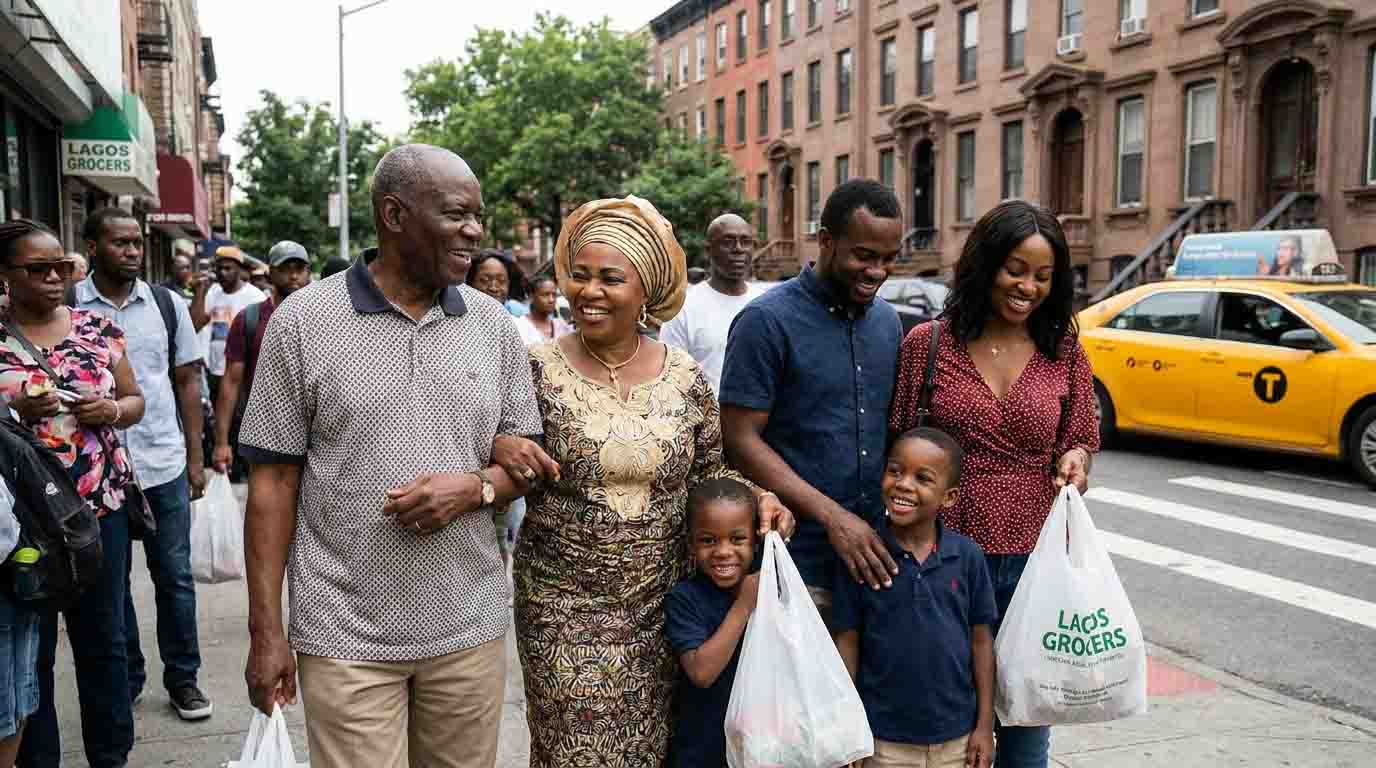
In areas like Alief, Missouri City, Sugar Land, and southwest Houston, Nigerian culture is deeply embedded into everyday life.
Some residents even refer to parts of Houston as “Little Lagos.”
For immigrants arriving in America, this ecosystem matters deeply.
It means:
- familiar food
- familiar language
- familiar worship spaces
- business support
- housing connections
- job referrals
- emotional community
One Nigerian entrepreneur described it simply:
“This is not survival anymore. This is strategic wealth creation.”
Education Became the Foundation of Success
One of the defining characteristics of Nigerian immigrants in America is education.
According to several studies, Nigerian immigrants are among the most educated immigrant groups in the United States.
Many arrive with backgrounds in:
- medicine
- engineering
- accounting
- pharmacy
- nursing
- computer science
- law
- academia
Inside Houston’s world-renowned medical institutions, Nigerian doctors, nurses, pharmacists, and healthcare professionals play major roles within the healthcare system.
Education within many Nigerian households is not viewed as optional.
It is often treated as survival, investment, and family legacy all at once.
For many first-generation immigrants, success was never seen as individual achievement alone.
It was proof that the sacrifice of migration was worth it.
The Rise of Nigerian Wealth in Houston
Over time, many Nigerians in Houston moved beyond employment into ownership.
Families invested heavily in:
- real estate
- healthcare businesses
- logistics
- retail
- hospitality
- import/export
- home healthcare
- transportation
- consulting
In many Nigerian households, income is often viewed collectively rather than individually.
A nurse buys one property.
Rental income funds another purchase.
A relative starts a business.
Another family member handles accounting.
Another handles legal work.
The network compounds itself.
This long-term thinking has helped many Nigerian families quietly build substantial wealth across Houston and surrounding suburbs.
Unlike the stereotypical image of immigrant struggle often portrayed in media, many Nigerians approached Houston strategically:
- buy property
- build businesses
- educate children
- reinvest continuously
- think generationally
The Hidden Cost of Migration
But behind many success stories lies a painful reality.
For every Nigerian doctor thriving in Texas, there may be one less doctor available in Lagos, Abuja, or Port Harcourt.
For every highly trained engineer working in Houston’s energy sector, Nigeria loses talent it helped educate.
This is the difficult side of migration rarely discussed openly:
brain drain.
Nigeria continues losing thousands of highly skilled professionals every year to countries offering:
- better salaries
- stronger institutions
- safer environments
- stable infrastructure
- long-term opportunities
While remittances sent home by Nigerians abroad contribute billions of dollars annually to Nigeria’s economy, money alone cannot replace lost expertise.
Hospitals still lose doctors.
Universities still lose lecturers.
Companies still lose highly skilled workers.
The diaspora gains opportunities.
The home country loses capacity.
The Pressure on Second-Generation Nigerians
For second-generation Nigerian-Americans born in Houston, life often becomes more complicated than it appears.
Many grow up balancing two worlds simultaneously.
At school, they are American.
At home, they are Nigerian.
In public, they are Black.
Inside family gatherings, they are expected to preserve culture, language, and tradition.
Many children of immigrants also grow up carrying enormous pressure.
Parents who crossed oceans often expect their sacrifices to produce visible success:
- doctor
- lawyer
- engineer
- pharmacist
- executive
Ambition becomes inheritance.
But younger generations increasingly ask different questions:
What if success looks different?
What if someone wants creativity instead of medicine?
What if they want film, politics, design, music, or entrepreneurship?
This tension is reshaping many immigrant households across Houston today.
Nigerian Culture Is Now Influencing Mainstream America
What was once considered “foreign” is increasingly becoming mainstream.
Nigerian music, food, fashion, and culture now influence American culture at levels few imagined decades ago.
Jollof rice, Suya, Afrobeat music, Nollywood, and African fashion are becoming more visible across Houston and beyond.
Restaurants serving West African food now attract diverse customers from multiple ethnic backgrounds.
Afrobeats artists sell out major venues globally.
African fashion appears on international runways.
Nigerian professionals increasingly hold leadership positions across industries.
The children of immigrants are no longer simply adapting to America.
In many ways, they are reshaping it.
More Than Immigration A New Global Identity
The Nigerian story in Houston is ultimately about more than migration.
It is about what happens when ambitious people move into systems that allow their effort to scale.
Houston offered:
- infrastructure
- stability
- electricity
- financial systems
- opportunity
- access to capital
Nigerians brought:
- education
- discipline
- entrepreneurial thinking
- strong family structures
- resilience
- cultural identity
Together, those forces created one of the most successful African diaspora communities in the world.
And perhaps the most remarkable part of the story is this:
Many Nigerians did not just leave home.
They rebuilt parts of it somewhere else.
From churches and markets to hospitals and businesses, a city within a city quietly emerged inside Houston.
A modern Little Lagos. Thousands of miles from Nigeria. Yet still deeply connected to it.
Source: The Human Map YouTube


